Write a short song as a personal gift
Choose a small memory, describe it in your own words and find one phrase you would like to repeat. Build a simple backing if you want one, then decide how the recipient will hear or read the result. A thoughtful short idea can be your finish line; it does not have to become a public release.
This guide connects lyric writing, chord accompaniment and optional recording. You can begin on paper without an account or a microphone.
Start with the lyric-writing guideBuild a simple backing
Pick one detail instead of a whole life story
Think of an ordinary action you remember: keeping a seat, making tea or waiting through a rainstorm. Write what happened before trying to make it rhyme. A concrete detail gives you something you can say naturally.
Keep anything private out of public drafts. You can use an invented scene while practising and decide later which real details, if any, you want to include.
An original four-line starting example
These lines were written for this guide around an invented shared memory:
- You kept a chair beside the kitchen door
- I came in late; you made some tea once more
- There was a place for me
- There was a place for me
The first two lines describe the scene. The repeated phrase gives the idea somewhere to return. Try speaking the lines, shortening a word or changing the ending. You can write something completely different; rhyme is optional.
This is a writing prompt, not a recorded song or a claim about a real person. For a longer draft, the second-verse guide explains how to move a story forward rather than repeat every detail.
Keep the words and try a musical shape
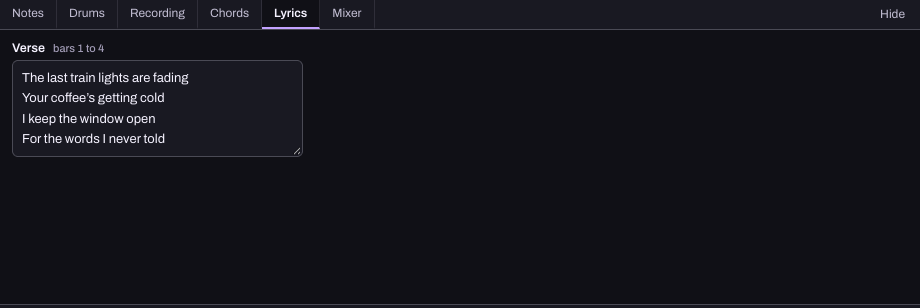
This reference capture contains a different example. Text in the Lyrics editor remains text until you separately perform or record it. It does not automatically become singing.
Hum a comfortable short phrase or speak the words rhythmically. If you try Hearhood’s melody capture, follow the humming guide and check the notes it produces. You can also keep the gift as written lyrics without recording a voice.
Use a backing that supports the message
The chord-to-backing walkthrough shows how chord names become an editable instrument part. Start simply and compare the phrase with and without another layer.
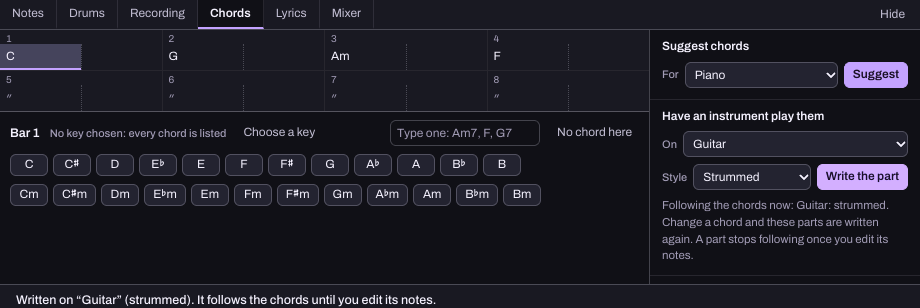
The reference progression is an example, not a required harmony for a gift song. If the tune sits uncomfortably high, use the voice and key guide to understand how editable notes and chords move together. Existing audio recordings are a separate matter.
Rehearse one phrase, then choose the format
The companion Find a phrase for a gift song course provides a first-line box and a repeated-phrase exercise. It is a useful separate writing warm-up. Copy anything you want to keep; the course does not add it to your song automatically.
For a recorded gift, follow recording vocals and test a short take first. Use saving and exporting to keep a listening file and the editable project with any required recordings. Listen to the actual file before giving it to someone.
A private listening file, a handwritten lyric and a public upload are different choices. You do not need to upload the song to give it as a gift. This guide does not send the file or publish it for you.
Quick answers
What if I cannot sing confidently? You can start with words, speak a rhythm or give written lyrics. A vocal performance is optional for this activity.
Does it need to sound like the recipient’s favourite artist? Use your own scene and musical choices. This workflow does not promise artist imitation or a cloned voice.
Can I use an existing famous song as the backing? Do not assume a personal gift removes other people’s rights. Check the material and its permissions; the permission guide explains the distinction between listening and reuse.
About this guide
Prepared for Hearhood by Scopra with AI assistance. The kitchen scene and lyric are original examples, not a biography or a recorded performance. Read about Hearhood.