What is BPM in music?
BPM means beats per minute. It measures tempo: how quickly the musical pulse repeats. At 60 BPM, one beat takes one second. At 120 BPM, two beats fit into one second. BPM describes the pulse, not the total number of drum hits or notes you hear.
Hear and count 100 BPM
This original synthesized teaching example contains four bars of 4/4 at 100 BPM. The kick marks every beat; the snare falls on beats two and four. It illustrates counting and is not an export from Hearhood.
Download: Four bars of drums at 100 BPM (WAV)
Tap along with the kick. Count “one, two, three, four” and repeat that count four times. You have counted sixteen beats. At 100 BPM those beats occupy 9.6 seconds; the file also includes a short tail for the last sound to fade.
If the hi-hats tempt you to tap twice as quickly, return to the kick. Smaller notes can fit between the main beats. The beats and bars lesson explains how to keep the pulse while counting bars.
How long is one beat or bar?
Divide 60 by the BPM to get the duration of one beat in seconds. For a 4/4 bar where the counted beat is a quarter note, multiply that duration by four.
- At 60 BPM, a beat takes 1 second and a four-beat bar takes 4 seconds.
- At 100 BPM, a beat takes 0.6 seconds and a four-beat bar takes 2.4 seconds.
- At 120 BPM, a beat takes 0.5 seconds and a four-beat bar takes 2 seconds.
These bar lengths assume four counted beats per bar. Other meters and beat units change the relationship; do not assume every piece of music uses 4/4.
Tempo is different from a busy pattern
A hi-hat playing twice per beat makes a pattern busier without changing its BPM. Try tapping four evenly spaced beats, then saying “and” between each number: “one and two and three and four and.” Your taps can stay at the same speed while your voice adds subdivisions.
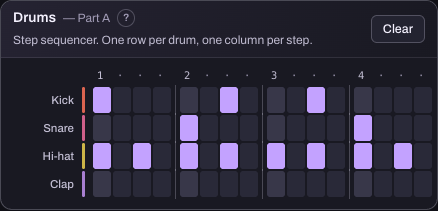
To explore this in Hearhood, use the first-beat exercise. Keep its tempo steady and add or remove hi-hats. Then keep the notes unchanged while trying a different BPM. Compare spacing and pace as separate decisions, and keep a backup of a version you want to preserve.
Why can a track seem like 70 or 140 BPM?
You can sometimes follow a slower pulse or a pulse twice as fast in the same music. Half-time and double-time interpretations explain why two counts or tempo estimates may differ by a factor of two. The surrounding rhythm and musical context help decide which count is useful.
Matching BPM values alone does not align two DJ tracks. Their beats can still fall at different moments, and the musical sections can enter in awkward places. Practise the first transition and hearing phrase changes separately.
Does BPM change a song's key?
Tempo and key describe different things. Tempo concerns pace; key concerns pitch relationships. How software changes recorded audio depends on its playback and time-stretching features. Do not assume every speed control preserves pitch or every tempo change transposes notes.
For moving editable pitches higher or lower in Hearhood, use the key-change lesson. For today's exercise, finish when you can tap sixteen steady beats and explain the difference between a faster pulse and more notes between beats.
Further reading
Ableton's beat and tempo lesson provides another interactive explanation of pulse and BPM.