Could guitar be a good next music interest?
Explore the difference between a repeated accompaniment and a single-note idea before choosing guitar lessons. This guide helps a parent and learner explore an interest without buying equipment first. It does not prescribe an instrument for an age or promise that one choice will be easiest.
What to listen or look for
A plucked guitar string vibrates. An acoustic guitar's body helps turn that vibration into audible sound. A chord groups notes together; strumming is one way to set a rhythm with them. These concepts do not teach fingering or show how a particular guitar fits the player.
Try one idea without an instrument
Say an invented line, such as Lanterns wake beside the lake. Keep four slow counts while a partner says a soft sound on counts one and three. Swap roles. Ask whether supporting the words or inventing a tune was more interesting. You are exploring an accompaniment role, not practising strumming technique.
Ask: Would you rather support a song, play a tune, or try both? Let the learner choose whether to repeat, change the idea or try a different instrument role. An adult can write down the answer; no account, recording or public performance is needed.
Take a useful question to an introductory lesson
Ask for a chance to try an appropriate instrument with guidance on fit and setup. Discuss the sounds the learner likes, how the first notes or chords will be demonstrated, access needs and what to practise at home. Avoid choosing a guitar only from a screenshot or an age chart.
Keep your question concrete: “Can we try one small musical task and talk about what the learner noticed?” An introductory conversation can help you understand the next step without treating a short activity as a talent assessment. This page does not recommend a particular teacher, retailer or model.
Where a screen example can help
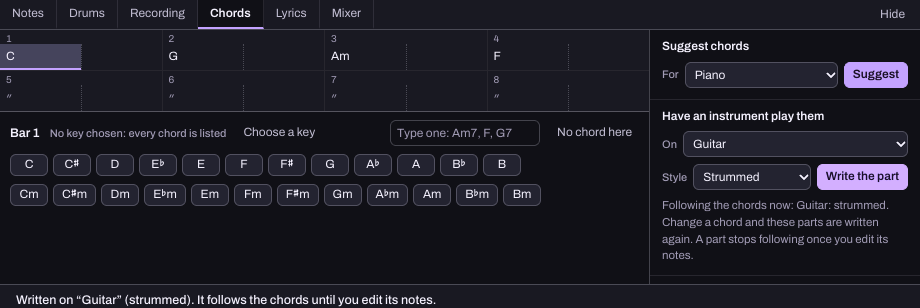
This reused Hearhood capture shows an optional musical planning tool for an adult or otherwise eligible learner. It is not a photograph of an instrument lesson or evidence of a child using the app. For a separate screen activity, read Build a backing from chord names. Check the family access guide before any child app use; under-13 accounts are unavailable.
A generated guitar part is an editable musical example, not evidence of physical playing ability. Screen chord names do not teach string pressure, tuning or hand movement.
A note you can keep
Write three short answers: “The sound or role we liked was…”, “The task we want to try with guidance is…”, and “The question we still have is…”. Keep it private if you prefer. A different answer next week is welcome.
Sources and scope
Prepared for Hearhood by Scopra with AI assistance. Instrument background: Yamaha: how an acoustic guitar makes sound. The offline exploration task is an original editorial suggestion, not a reproduced manufacturer lesson or tested learner result. Physical instrument technique needs appropriate individual guidance.