Listen to one change at a time
A mix comparison is easier to understand when only one thing changes. Start with the same phrase, the same playback volume and one question: what became easier or harder to follow?
The clips here are original synthetic reference examples. They explain balance and tone; they are not a recorded vocal, a member's track or an export of Hearhood's EQ processing.
Compare the original with a quieter bass
Play the original phrase, then the same phrase with the bass six decibels quieter. The melody's level stays the same. Six decibels here means about half the bass signal's amplitude, not a claim that every listener perceives it as half as loud.
Listen for the relationship between the bass and the higher melody. B may feel less full, or the melody may be easier to follow. Those are observations, not instructions that every mix needs a quieter bass. The overall level changes because one part changes; do not simply choose whichever example sounds louder.
With sound off, the equivalent description is: both examples contain the same notes and timing; B reduces the bass part while keeping the melody unchanged.
Compare balance with tone
Now compare the original with the low tone reduced. This reference reduces the bass's 110 Hz fundamental while leaving its 220 Hz component and the higher melody alone. It illustrates a tone change, rather than turning the entire bass part down.
A real EQ works across frequency bands. This simple reference is not a measurement of the app's filter shape, your headphones or your room. Its purpose is to make “less of the low sound” concrete before you start adjusting controls.
Try the idea on a separate song copy
In Produce's My songs, keep an editable backup, press Duplicate, then open the new copy from the library. Duplicate does not open the copy automatically. Read compare two song versions if you need that setup.
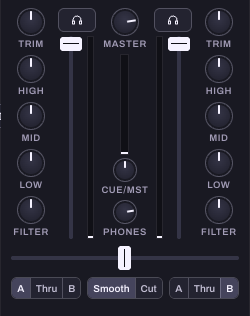
Open Mix and lower the bass level a little while leaving the other settings alone. Compare the same section with the original. Return the level before trying an EQ change, so you can tell which action made the difference. A whole-song bass change is different from editing one section's notes.
Describe the result without jargon
Try one sentence: “With less bass, I can follow…” or “With the low tone reduced, the phrase feels…”. If you cannot tell, keep the original and try a clearer but modest change. You do not have to invent an improvement to finish the exercise.
The in-app Short courses include mix-balance and EQ exercises with visible numbers and optional sound. They are separate practice spaces. When returning to your own work, keep a version you can revisit and listen to the exported result too.